How to Get FMCG Distributorship in India | Complete Guide
Learn how to get FMCG distributorship in India, required investment, documents, margins and how AppointDistributors.com helps find opportunities.
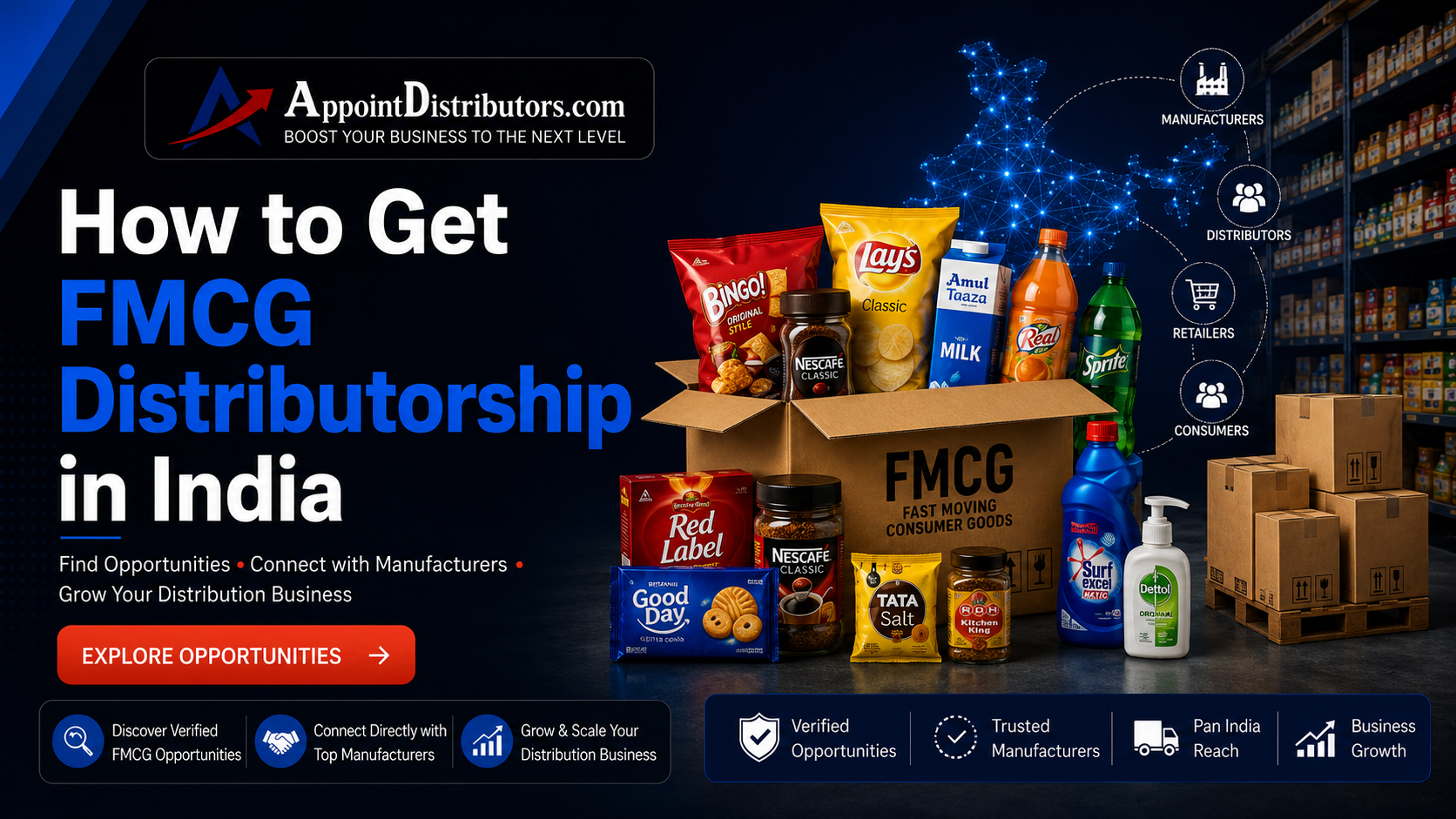
Starting a business that sells products can be a good idea for people who want to work in the product supply and distribution market. These everyday products are things that people buy and use all the time.
Food, drinks, snacks, spices, tea, coffee, dairy products, and cleaning supplies are some examples of these products. Because people need these products regularly stores need to get them from distributors who can supply them on a basis.
Many people look for business opportunities to start a business that sells these products. They may not know what kind of products to sell, how to find manufacturers, or what they need to do to get started. To have a business, you need to do some research, have a good plan and be able to manage your stock and deliveries.
This guide will explain how to start a business that sells products, what you need to get started, and how a business called AppointDistributors.com can help manufacturers and distributors connect.
What is a business that sells products?
A business that sells products is a company that buys products from a manufacturer and sells them to stores, supermarkets, and other businesses.
The person in charge of this business acts as a link between the manufacturer and the local market. The manufacturer makes the products, and the distributor makes sure they get to the stores and customers.
A distributor may be responsible for:
Buying products from the manufacturer
Storing products safely
Delivering products to stores
Managing. Payments
Building relationships with store owners
Making sure products are available in the market
Giving feedback to the manufacturer
A run-distribution business is good for both manufacturers and stores. Manufacturers can sell their products to people and stores can get the products they need without having to contact many different manufacturers.
Why start a business that sells products?
A business that sells everyday products deals with things that people buy and use all the time. Unlike seasonal products, many everyday products need to be restocked regularly.
Stores may order the products again and again, like food, drinks, snacks, and cleaning supplies. This can create a stream of business for distributors.
Some benefits of starting a business that sells products include:
Regular demand for products
Opportunities to sell products that people use every day
A wide range of products to choose from
The chance to build a network of stores and businesses
The potential to build long-term relationships with manufacturers and stores
However, starting a business that sells products is not a guarantee of success. The type of products you sell, the demand in the market, and how well you run your business can all affect how well you do.
Popular categories for products
The market for everyday products includes many different categories. Before you start a business, you need to understand what products are in demand in your area.
Some common categories include:
Food
Snacks
Bakery products
Drinks
Tea and coffee
Spices
Dairy products
Confectionery
Organic products
fruits and nuts
Personal care products
Homecare products
The right category for you will depend on what people in your area want to buy, how much competition there is and what you can afford to store and transport.
How to start a business that sells products in India
The process of starting a business that sells everyday products may vary depending on the manufacturer and the type of products. However, here are some steps you can follow to get started:
1. Choose a product category
Decide what type of products you want to sell. Choose a category that you know something about and that you think you can sell well in your area.
Consider things like:
What products do people in your area want to buy?
How many stores are already selling these products?
How long do the products last?
How will you? Transport the products?
How much competition is there?
How often will stores order the products?
What will you charge for the products?
2. Research the local market
Do some research to find out what products are in demand in your area.
Visit stores, supermarkets, and other businesses to see what they are selling. Talk to store owners to find out what products they need and what they are looking for in a distributor.
Your research should cover:
What products are people buying?
What brands are already available in the market?
What products are hard to find?
How often do stores order products?
What do stores pay for the products?
What are the common practices for payment and delivery?
3. Prepare the necessary infrastructure
Manufacturers usually prefer to work with distributors who can store manage and deliver products professionally.
Depending on the type of products you want to sell you may need:
A clean and secure place to store the products
A way to manage your stock and orders
A way to deliver the products to stores
Staff to help with sales and deliveries
office equipment and communication tools
A network of stores and businesses to sell to
A system to track payments and outstanding credit
4. Get your business documents ready
Manufacturers may ask for business and identity documents before they approve your application.
Make sure you have:
Identity proof
PAN details
GST registration
Address proof
Business registration documents
Bank account details
Cancelled cheque
Warehouse or office details
Photographs of your business premises
Details of your existing network of stores and businesses
experience in sales or distribution
5. Find manufacturers who are looking for distributors
Once you have chosen a product category and prepared your infrastructure start looking for manufacturers who are looking for distributors.
You can find these opportunities through:
Manufacturer websites
Distributor appointment portals
Trade shows and business exhibitions
Industry associations
Local sales representatives
Business directories
Professional networking groups
Referrals from stores and businesses
When you approach a manufacturer, make sure you have an inquiry. Include:
Your name and business location
The type of products you want to sell
The area you can cover
Your available storage space
Your existing network of stores and businesses
Your previous experience
Your delivery capability
Your contact information
6. Verify the manufacturer and business opportunity
Before you start working with a manufacturer, make sure you verify their business and understand the terms of the agreement.
Check:
Company registration and business identity
GST information
Product quality and packaging
product licenses or certifications
Existing product availability
Market reputation
Supply consistency
Territory availability
Product. Replacement terms
Support provided to distributors
Billing and payment process
Written distributorship agreement
Do not rely on verbal communication. Make sure all the terms and conditions are clearly documented.
7. Understand the distributorship terms
Before you sign an agreement, make sure you understand how the business will work.
Important points may include:
* The area you will cover
* The products you will sell
* The. Delivery process
* The payment terms
* Your sales responsibilities
* The product replacement policy
* The. Damaged-stock policy
* The marketing support
* The retailer schemes
* The product availability
* The agreement duration
* The conditions for renewal or termination
The agreement should clearly explain the responsibilities of both the manufacturer and the distributor. Read the document carefully. Seek professional advice if you need to.
8. Build a network of stores and businesses
Getting a distributorship is just the beginning. To grow your business, you need to build a network of stores and businesses that will regularly buy and sell your products.
Potential business partners may include:
Grocery stores
Supermarkets
Departmental stores
Wholesalers
Convenience shops
Pharmacies
Restaurants and cafes
Hotels
Canteens
Institutional buyers
sellers
Visit these businesses regularly explain your products clearly and provide good service. Stores usually prefer distributors who can supply products regularly provide billing and resolve issues quickly.
How AppointDistributors.com helps manufacturers and distributors
AppointDistributors.com is a platform that helps manufacturers, brands, wholesalers and people looking for distributorship opportunities connect with each other.
Entrepreneurs who want to start a business can explore opportunities in product categories, connect with manufacturers and submit business enquiries.
Through AppointDistributors.com, potential distributors can:
* Search for distributorship opportunities
* Explore product categories
* Connect with manufacturers
* Submit business enquiries
* Find opportunities based on their locations
* Discover brands that are expanding their distribution network
Manufacturers can use the platform to find distributors for different areas and sales territories. This can help brands expand their market reach without relying on offline references.
A person who searches for "I want distributorship" can use the platform to find business opportunities instead of contacting unrelated companies individually.
To start a business with a company, distributors should do their research on the company the products they sell the documents they need to sign and the agreement they have to make.
Important Qualities of a FMCG Distributor
Being an official distributor is not enough to have a stable business. Successful FMCG distributors usually have relationships with people in the market and they are very organized.
Some important qualities of a FMCG distributor include:
Understanding the market
A distributor needs to know what customers want what retailers like and who the competitors are.
Visiting retailers regularly
Going to the market often helps distributors get orders get feedback and build relationships with retailers.
Managing inventory properly
Stock should be organized by how much of a product is needed, when it was made and when it will expire.
Delivering products on time
Retailers expect to get products when they are promised or they might switch to another distributor.
Controlling credit
Giving much credit can cause problems with the business so it is necessary to have clear payment terms and collect payments regularly.
Knowing the products
Distributors and sales staff should know the benefits of the products how they are packaged, how to use them and what retailers like about them.
Communicating clearly
If there are any problems with products or deliveries, distributors should tell retailers and manufacturers right away.
Common Mistakes to Avoid in a Distributorship Business
Distributors sometimes make decisions without thinking about the market. Avoiding mistakes can help make the business more stable.
Selecting products without researching the market
A product might look good. It might not be something that people in your area want to buy.
Stocking many products at once
Starting with too many products can make it hard to keep track of inventory and sales.
Ignoring product expiry
Some products, like food and personal care items do not last so stock should be rotated regularly.
Depending on few retailers
Having a bigger network of retailers can reduce the risk of relying on just a few buyers.
Giving much credit
Credit should be given carefully with clear payment dates and regular follow-up.
Relying on promises
Important details like territory, product returns, and payment conditions should be written down.
Ignoring retailer feedback
Retailers talk to customers directly so their feedback can help distributors understand what customers want and what they do not like.
How to Grow an FMCG Distributorship
After getting an FMCG distributorship focus on doing business instead of waiting for retailers to come to you.
To grow the business:
* Add retailers to your network regularly
* Keep supplying products
* Keep track of products that sell quickly and slowly
* Follow up on retailer payments
* Keep the warehouse organized
* Train sales staff about the products
* Share feedback from the market with the manufacturer
* Cover areas where permitted
* Support approved promotional activities
* Keep records of orders, deliveries and payments
Good service can be a big advantage in the FMCG market. Retailers often keep working with distributors who deliver products on time and respond quickly to problems.
Is FMCG Distributorship a Good Business Opportunity?
An FMCG distributorship can be a business opportunity because it deals with products that people use every day. However the success of the business depends on how much productsre needed how reliable the supply is, the network of retailers collecting payments and daily market activity.
An entrepreneur should not choose an opportunity just because a manufacturer is looking for a distributor urgently. Just because a manufacturer is looking for a distributor urgently does not mean it is an opportunity.
Before moving verify the business study the product category and confirm whether the distributorship fits your market and capabilities.
With planning, retailer connections and inventory control an FMCG distributorship can become a big distribution network.
Conclusion
Starting an FMCG distributorship in India requires researching the market knowing the products having infrastructure and a dependable network of retailers. Entrepreneurs should first choose a product category understand local demand prepare business documents and contact verified manufacturers.
Platforms like AppointDistributors.com can help people find FMCG distributorship opportunities, connect with manufacturers and explore product categories. Manufacturers can also use the platform to find distributors for locations and expand their business.
Whether you want to get a distributorship start an FMCG distribution business. Become a distributor focus on product demand verifying the business serving retailers and developing the market in the long term.
Frequently Asked Questions
1. How can I get an FMCG distributorship in India?
To get an FMCG distributorship in India, choose a product category research your local market prepare the required documents and contact manufacturers who offer FMCG distributorship opportunities. You can also use AppointDistributors.com to find brands looking for distributors in locations.
2. What should I write when I want a distributorship?
Of just saying "I want a distributorship," mention your location, preferred category, available infrastructure, retailer network, delivery capability and business experience. A detailed enquiry helps manufacturers understand whether you are suitable for their distributorship business.
3. How can manufacturers get distributors for FMCG products?
Manufacturers can get distributors through their websites, trade exhibitions, sales teams, industry networks and B2B platforms, like AppointDistributors.com. A clear opportunity listing should mention the product category, territory and expected distributor capabilities.
4. Should I apply when a company posts distributor wanted urgently?
You may look at an opportunity that is labeled "distributor wanted urgently." You should not proceed without verifying the company, product demand, documents, territory, product policies and distributorship agreement before starting an FMCG products distributorship.
What's Your Reaction?