Is Organic Products Distributorship Business Worth It in India?
Is the Organic Products Distributorship Business Worth It?
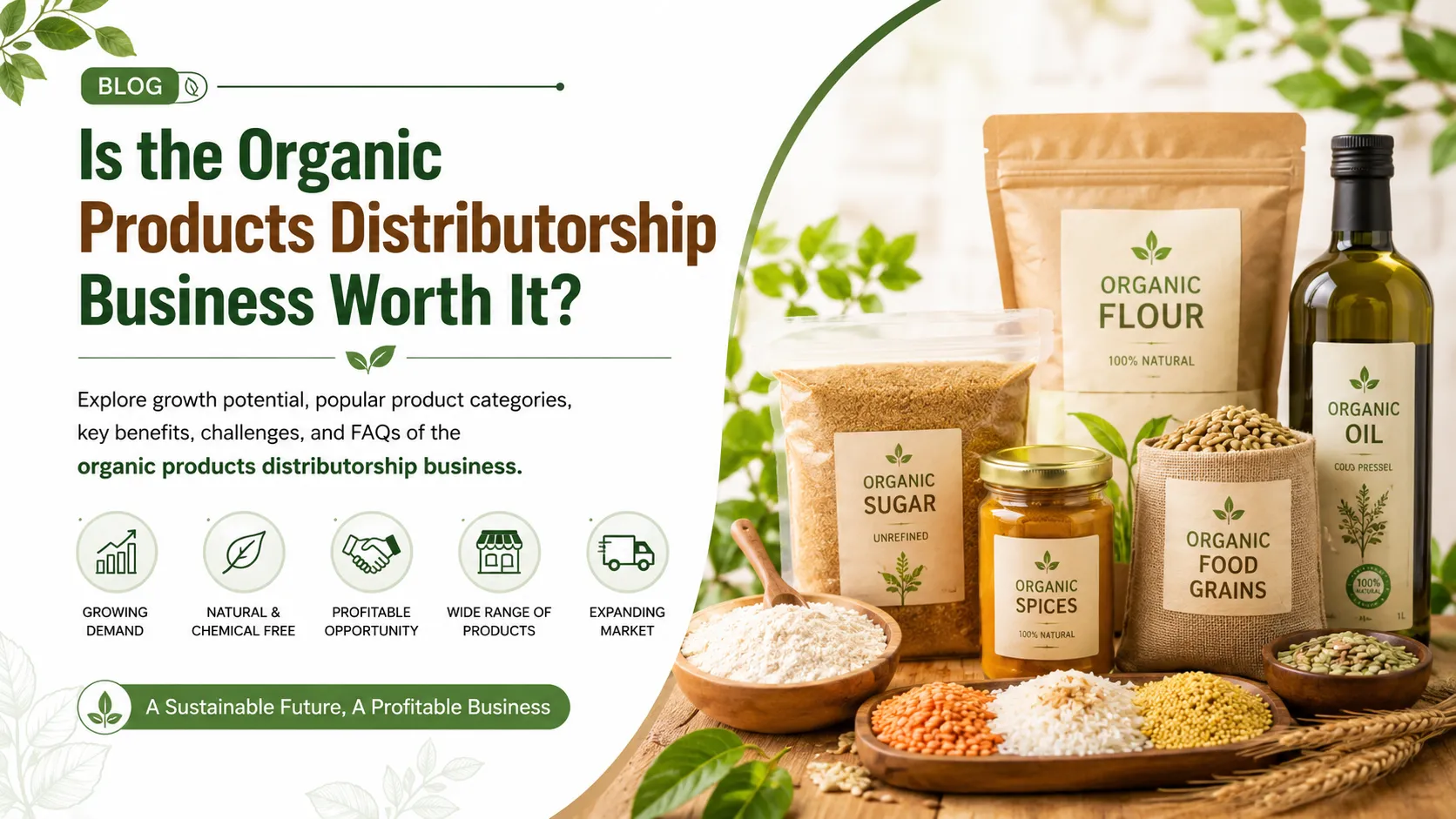
The organic products industry has grown a lot over the few years. Nowadays more people are looking for food items that are produced naturally without chemicals. This change in the way people buy things has created opportunities for entrepreneurs who're interested in the organic products distributorship business.
From sugarwho arelour to organic oils and spices, the market now has a wide range of products that people use every day. The big question is. Is the organic products distributorship business really worth investing in? The answer depends on how much people want these products, which products you choose to sell, who you partner with to get these products, and how you plan to get them to customers.
In this blog we will explore the potential for growth, main product categories, business opportunities, challenges, and questions related to organic product distributors and distributorship opportunities.
Why the Organic Products Market is Growing
People today are more aware of the quality of food than before. Many people prefer products because they do not contain harmful pesticides, artificial fertilizers, and synthetic chemicals. Because people are getting more concerned about their health and there is awareness about the environment, families are starting to eat healthier.
The Indian organic food market is growing steadily. This increasing demand has made the distributor business in this segment one of the promising sectors in the food industry.
Popular Product Categories in Organic Product Distributorship
One of the advantages of starting an organic product distributorship is the range of products available for distribution.
-
Organic sugar is becoming popular among people who care about their health.
-
There is a growing demand for organic sugar in households.
-
Fitness enthusiasts prefer organic sugar.
-
Cafes, bakeries, and health food stores also like organic sugar.
-
Organic sugar is used more and more in packaged foods that're organic.
-
-
Organic flour is another product that is selling well in the food segment.
-
People buy organic flour again and again.
-
Households use organic flour every day.
-
Families who care about their health want organic flour.
-
Restaurants and cafes are also using organic flour.
-
-
Organic food grains include rice, pulses, millets, lentils, and cereals that are produced without fertilizers or pesticides.
-
More people are becoming aware of the benefits of eating healthy.
-
The government is supporting farming.
-
There is an increase in the export of grains.
-
People who buy premium groceries like organic food grains.
-
-
Organic oils are in demand.
-
People prefer organic oils that are processed.
-
Organic Oils are popular among people who follow Ayurvedic and wellness lifestyles.
-
Organic Oils are a high-value product.
-
You can sell Organic Oils online and offline.
-
-
Organic Spices are becoming a premium product category.
-
Organic Spices are products in every household.
-
There are export opportunities for organic spices.
-
Restaurants and hotels want organic spices.
-
Many buyers prefer organic spices.
-
Is the Organic Product Distributorship Business Profitable?
The profitability of any distributorship depends on factors.
Key benefits of the organic product distributorship business are the following:
-
Growing Consumer Demand: The market for products is still growing, so there is a lot of room for expansion.
-
Premium Pricing: Organic products are generally priced higher than conventional products.
-
Repeat Customer Base: Since food products are essential, customers buy them regularly creating opportunities for repeat business.
-
Diverse Product Range: Distributors can work with categories like flour, oils, grains and spices, which increases revenue streams.
-
Expansion Opportunities: The business can expand from distribution to even national supply networks.
Challenges in Organic Product Distribution
Although the sector is promising, there are challenges that entrepreneurs should understand before entering the market.
These challenges include limited product awareness in markets, supply chain management, competition, and certification and Trust.
How to Start an Organic Product Distributorship
Starting a distributorship business in the sector requires planning.
Steps to Start an organic product distributorship are the following:
-
Step 1: Research the Market to understand which organic products are in demand in your target area.
-
Step 2: Choose Reliable Suppliers who offer certified and quality-tested products.
-
Step 3: Build Retail Networks by connecting with grocery stores, supermarkets, wellness stores, cafes and local retailers.
-
Step 4: Focus on branding to educate customers about the benefits of food products.
-
Step 5: Use B2B platforms like AppointDistributors.com to connect with distributors, dealers and suppliers across industries.
Frequently Asked Questions
-
Q1. Is the organic products distributorship profitable in India? Yes the organic products market is growing rapidly in India due to increasing health awareness and consumer demand for natural food products.
-
Q2. Which organic products are in demand? Organic flour, organic oils, organic spices, organic sugar and organic food grains are among the most demanded categories.
-
Q3. How much investment is required for distributorship? The investment varies depending on the product range, inventory size, warehouse requirements and business scale.
-
Q4. Where can I find product suppliers? You can connect with product suppliers through trade fairs B2B platforms, wholesalers, and online distributor networks.
-
Q5. Is organic distributorship suitable for businesses? Yes, small businesses can start with product categories and gradually expand as demand increases.
Final Thoughts
The organic products distributorship business seems like an opportunity for entrepreneurs who want to enter the food and FMCG sector.
Whether it is sugar, flour, food grains, oils, or spices, each category offers demand and future growth potential. With the supplier partnerships, proper market research, and an effective distribution strategy, this distributorship business can become both profitable and sustainable in the long run.
Businesses looking to expand their distributor network or entrepreneurs searching for distributorship opportunities can also explore platforms like AppointDistributors.com to connect with partners in the industry.
What's Your Reaction?