FMCG Distributors Business Profitable in 2026 | AppointDistributors
The Truth About FMCG Distributors Making Money Right Now
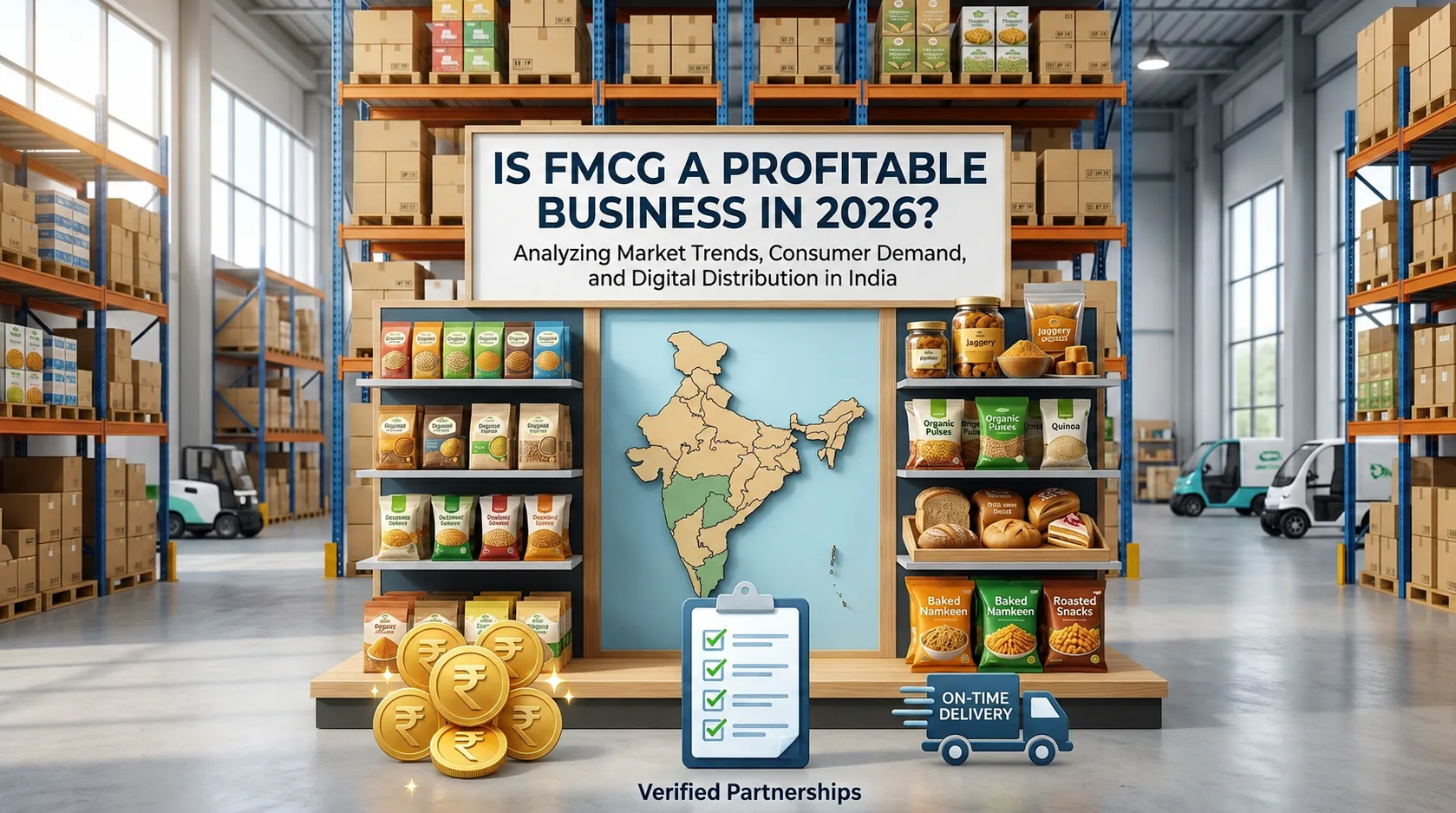
Here's what you need to understand about the FMCG distribution business in 2026: it's not rocket science, but it works. People need to eat, drink, and buy everyday products. That's not changing. And someone's got to get those products from factories to stores to your kitchen. That someone could be you.
Food and beverage distributors have it pretty good right now, and I'll tell you exactly why. Unlike manufacturers who wait months to see if their product sells, or retailers who get stuck with inventory that doesn't move, distributors operate in this sweet spot where products just keep flowing. Money comes in faster, inventory doesn't pile up, and you're not bleeding cash waiting for sales.
Plus, you don't need a massive factory or a fancy store. You just need to understand how to move products efficiently. That's genuinely doable.
Why the Money's Actually There for Distribution
Let me break this down in a way that makes sense:
The Numbers Work. FMCG distributors typically make 8-15% margin on regular products. That might not sound like much, but when you're moving volume—and trust me, FMCG moves volume—those percentages add up fast. On a $100,000 monthly turnover, that's real money hitting your pocket.
Your Cash Doesn't Get Stuck. Here's something manufacturers don't get—when you distribute, products move. Buy today, sell tomorrow. Your money isn't trapped in slow-moving inventory. Fast turnover means faster cash flow, and faster cash flow means you can reinvest quicker or pay yourself sooner.
There's Less Risk. Unlike manufacturers betting on whether consumers will buy their new product, you're distributing stuff people already want. Demand is predictable. People will always need milk, snacks, bread, and fruits. That certainty is gold.
Where the Real Money's Hidden
Now here's where it gets interesting. The serious profit doesn't come from moving generic FMCG products—everyone does that. It comes from niches.
If you're handling organic product distributorship, you're not just moving food. You're moving a lifestyle choice. Customers who buy organic will pay 30-40% more, and honestly, they expect to. That's where your margin explodes. Same goes for honey product distributorship and jaggery product distributorship—these aren't commodities. They're premium items with loyal customers.
What about a dry fruits and nuts distributorship? Or snacks and namkeen distributorships? These categories are booming right now because people are getting health-conscious but still want taste. Bakery products distributorship is another goldmine—artisanal and health-focused baking is everywhere now. Then you've got a milk and dairy product distributorship, which has steady, boring demand that actually translates to reliable income. Add fresh vegetables and fruits distributorship to the mix, and you've got a diverse portfolio that doesn't depend on any single category tanking.
The key is this: you're not competing on who can deliver cheapest. You're competing on who can deliver quality and reliability consistently. And guess what? That's where you actually make money.
The Nepal and Regional Play—Don't Sleep on This
If you're looking at emerging markets like Nepal, listen up. FMCG distributors in Nepal right now are in a position I'd honestly describe as enviable. The market is growing, retailers are expanding, and the logistics game is way less crowded than in developed countries.
Food and beverage distributors in Nepal don't face the same cutthroat competition as they do in big metros. You actually have room to build relationships. Food distributorships in Nepal and beverage distributorships in Nepal operate with less friction and more loyalty. Retailers know you, trust you, and stick with you. Try getting that kind of relationship in saturated markets.
FMCG distributorships in Nepal are specifically booming because retail infrastructure still relies heavily on independent distributors. Big corporations haven't swallowed everything yet. That's your window. It won't stay open forever, so if you're thinking about it, 2026 is the right time.
2026 is the Sweet Spot—Here's Why
Look, a lot changed in the last few years. Supply chains got messed up, logistics was a nightmare, and everything was expensive and unpredictable. That's mostly sorted now. You can actually plan without everything falling apart.
Logistics are stable. Shipping costs are reasonable, trucks are moving on schedule, and you're not playing guessing games anymore.
You don't need to be a tech genius. Distribution software that used to cost thousands? Now it's affordable SaaS that you can start using immediately. You don't need an IT department.
Bigger players are stepping back. Large distributors are consolidating and pulling out of smaller categories and regions. That's not a problem for them—they're chasing volume. But it's an opportunity for you. You can dominate niches they've abandoned. Food product distributorship in specialized categories is genuinely wide open right now.
Consumers are changing how they shop. Direct-to-consumer, online orders, specialty stores—retailers need flexible partners who can handle diverse SKU requirements. Food and beverage distributors who understand this trend and can actually deliver it have pricing power.
Let's Be Real: What Actually Matters
Here's the thing though—this won't work if you're not serious about it.
You need actual capital. Working capital beats everything. If you don't have cash to bridge the gap between paying suppliers and getting paid by retailers, you'll suffocate. Undercapitalized operations fail even in perfect markets. Plan for $50,000-$100,000 minimum if you're serious. Less than that? You're gambling.
Logistics is everything. Your competitive edge isn't your personality or your hustle. It's reliable delivery. Your products arrive on time, in good condition, every single time. That's what keeps retailers coming back. Screw that up, and margin doesn't matter.
Relationships are currency. This business lives and dies on relationships. With manufacturers, with retailers, with transport partners. Build trust. Keep your word. Show up consistently. That's not romantic—that's just how the business actually works.
Pick a lane and stay in it. Generic FMCG distribution is commoditized. Specializing in specific categories—whether that's beverage distributorships or organic product distributorship—is how you survive and actually profit. You become the expert they call.
How AppointDistributors Actually Helps You Get Moving
Here's the honest part about getting started: traditionally, finding manufacturers to partner with took forever. You'd cold-call, get rejected repeatedly, and maybe after months you'd land a partnership. That's exhausting and expensive.
AppointDistributors (appointdistributors.com) doesn't reinvent the wheel—it just speeds up what should be simple anyway. It connects distributors with manufacturers directly. You're looking for food products distributorships in specific categories? You can find manufacturers actively looking for partners. They're looking for food distribution businesses that can actually move products. You meet in the middle.
It's especially useful for FMCG distributors in Nepal and other regional markets where networking circles are smaller. Instead of spending months hunting, you've got access to verified partnerships in days. That's not magic—it's just removing the friction that shouldn't be there.
For manufacturers, it means faster network expansion without hiring salespeople or running expensive campaigns. Everyone wins.
The Bottom Line
FMCG distributors aren't getting rich quick. This isn't a get-rich-quick scheme. It's a solid, boring business where you show up, manage logistics, build relationships, and cash checks. That's actually beautiful because it means it works.
In 2026, the fundamentals are good. The market is expanding. The competition isn't insane yet in most categories and regions. Your real competition is yourself—whether you're disciplined enough to manage capital properly, obsessed enough about logistics to execute perfectly, and patient enough to build real relationships.
If you can do those three things, a food and beverage distributorship isn't a question of if you'll make money. It's a question of how much.
Real Questions People Actually Ask
Q1: So what's a realistic profit margin here? Are we talking serious money or pocket change?
A: For regular FMCG products, you're looking at 8-15% markup. Sounds modest, right? But at volume, it adds up. If you're moving $100,000 monthly, that's $8,000-$15,000 in your pocket every month. Now, if you focus on organic product distributorship or specialized categories, you can push that to 20-40%. Same turnover, way better margins. That's where the smart money goes.
Q2: Real talk—how much cash do I actually need to start this thing without going broke?
A: Look, you can start on $5,000-$10,000 if you're bootstrap-mode and super lean. But that's white-knuckle stress mode. You've got no room for mistakes. If you want to actually sleep at night? Aim for $50,000-$100,000. That covers initial inventory, transport setup, working capital buffer, and your living expenses while the business ramps. Anything less, and you're one bad month away from trouble.
Q3: I'm looking for manufacturers but don't know where to start. Is there an easier way than cold-calling for weeks?
A: Yeah, actually. Instead of grinding through phone calls, check out AppointDistributors (appointdistributors.com). You'll find manufacturers actively looking for food and beverage distributors to work with. You tell them what you're interested in distributing, and they come to you. Way faster than the traditional way. Whether you're chasing beverage distributorships or honey product distributorship, you'll find options.
Q4: Is beverage distribution more profitable than other food categories, or is it all the same?
A: It's not all the same. Honestly, beverage distributorships can be commoditized depending on the category. But if you're doing specialty beverages or regional brands? Different story. On the flip side, dry fruits and nuts distributorship or snacks and namkeen distributorship often deliver better margins because they're less competitive. The real money is in finding your niche and owning it, not in the product category itself.
What's Your Reaction?