Edible Oil Distributorship Business Opportunity | Cooking Oil & Allied Products Distribution
Understanding the Edible Oil and Related Products Market
oils are among the most frequently bought grocery products in India and many other countries. Every household uses cooking oil daily making it a necessity. Food manufacturers, bakeries, restaurants and snack producers also need oils in large quantities.
The related products segment includes specialty oils, nuts oils, blended oils and value-added oil-based products that cater to consumer preferences.
With rising consumption and expanding networks the distributorship business model has become an effective way for entrepreneurs to enter this growing market without investing in manufacturing facilities.
Why Choose an Edible Oil Distributorship Business?
The edible oil sector offers advantages for individuals looking to establish a successful distributor business.
-
Consistent Demand: Edible oils are used throughout the year. Every home requires cooking oil ensuring stable demand and repeat purchases.
-
Wide Customer Base: An edible oil distributor can supply products to grocery stores, supermarkets, hypermarkets, restaurants, hotels, food processing companies, catering businesses and wholesalers.
-
Product Variety: The market offers product categories allowing distributors to serve different customer segments and price points.
-
Growth Potential: As consumer awareness regarding healthy oils increases the demand for premium and specialty oils continues to grow creating opportunities within the allied product business sector.
Popular Products in the Edible Oil Distribution Industry
One of the strengths of this industry is the wide range of products available for distribution.
-
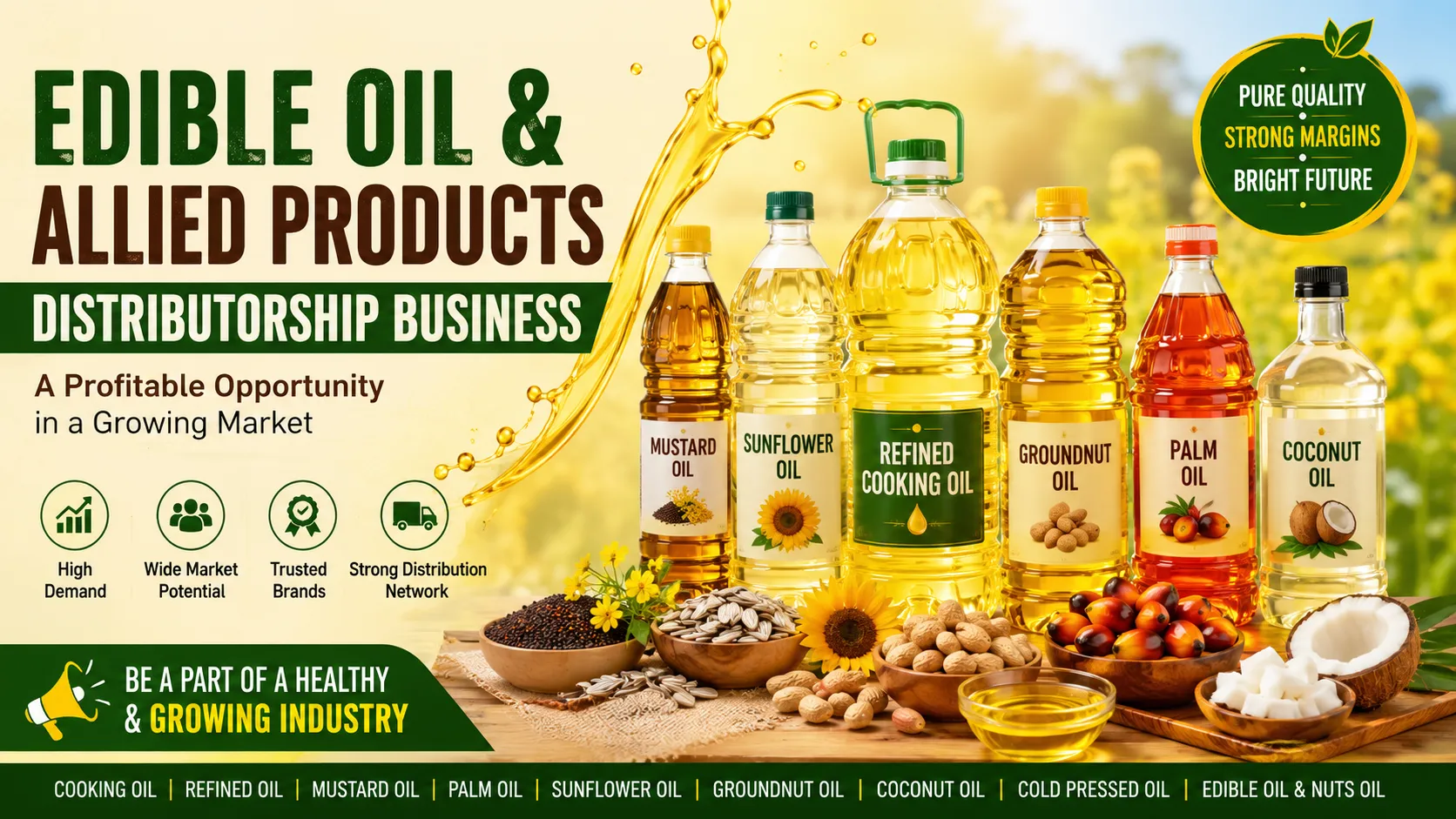
Cooking Oil: Cooking oil is a category that includes various oils used for daily food preparation.
-
Refined Oil: Refined oils are processed to remove impurities and provide a taste and longer shelf life.
-
Mustest Oil: Mustard oil is widely consumed in eastern parts of India.
-
Palm Oil: Palm oil is extensively used in food manufacturing, restaurants, bakeries and snack production due to its affordability and versatility.
-
Sunflower Oil: Sunflower oil is popular among health- consumers because of its light texture and nutritional profile.
-
Groundnut Oil: Groundnut oil, also known as peanut oil is valued for its taste and suitability for frying and cooking applications.
-
Coconut Oil: Coconut oil is used for cooking in regions and is also preferred by consumers seeking natural and traditional food products.
-
Cold Pressed Oil: Cold pressed oils have gained popularity due to increasing health awareness.
-
Edible Oil and Nuts Oil: Specialty oils derived from nuts are becoming increasingly popular among premium consumers.
How the Distributorship Business Model Works
The distribution model is relatively straightforward. Manufacturers appoint distributors to help expand their market reach. Distributors purchase products from brands. Supply them to retailers, wholesalers and institutional buyers.
A typical distributor business involves:
-
Obtaining distribution rights from a brand.
-
Maintaining stock inventory.
-
Managing logistics and deliveries.
-
Building retailer relationships.
-
Expanding market coverage.
-
Supporting sales growth within the assigned territory.
Investment and Infrastructure Requirements
The investment required for an oil distributorship business depends on factors such as brand requirements, territory size, product range and storage capacity.
Common requirements include:
-
Warehouse or storage facility
-
Transportation arrangements
-
Working capital
-
Inventory management system
-
Sales team
-
Retailer network
How to Get Distributorship Opportunities
Entrepreneurs looking to get distributorship opportunities should follow an approach.
-
Research the Market: Identify which edible oil products have demand in your target area.
-
Evaluate Product Categories: Determine whether your market prefers mustard oil, sunflower oil, refined oil, coconut oil or cold pressed oil products.
-
Connect with Brands: Many manufacturers regularly publish wanted distributors announcements for expanding markets.
-
Analyse Business Potential: Before signing any agreement evaluate product demand, competition, profit margins, brand reputation and market growth potential.
Benefits of Becoming an Edible Oil Distributor
Starting an oil distributorship business offers several advantages compared to launching a manufacturing unit.
-
Lower Operational Complexity: Distributors do not need to manage production facilities, machinery or raw material procurement.
-
Established Brand Support: Many companies provide distributors with materials, training and marketing support.
-
Repeat Business: Since edible oils are daily-use products customers purchase them regularly creating recurring sales opportunities.
Challenges and How to Overcome Them
Like any business distribution also comes with challenges.
-
Competition: The edible oil industry has established players.
-
Price Fluctuations: material and commodity prices can affect oil prices.
-
Market Coverage: Expanding into areas requires continuous efforts and retailer engagement.
-
Consumer Preferences: Customer preferences change over time.
Future Scope of the Allied Product Business
The future of the oil sector looks promising due to population growth increasing food consumption and rising awareness about nutrition.
For entrepreneurs seeking a distributorship business, edible oil and allied products offer strong long-term potential with steady demand and market growth.
Frequently Asked Questions (FAQs)
1. Is an edible oil distributorship business profitable?
Briefly answer here... Yes the edible oil distributorship business can be profitable because edible oils are household products with year-round demand.
2. How can I get distributorship for oil brands?
To get distributorship you should research suitable brands evaluate local demand prepare the required investment and connect with companies that have wanted distributors requirements, in your region.
3. Which products should I include in a product business?
An allied product business can include cooking oil, refined oil, mustard oil, sunflower oil, palm oil, coconut oil, groundnut oil, pressed oil and edible oil and nuts oil products to serve different customer preferences.
4. Why do companies announce wanted distributors opportunities?
Companies announce wanted distributors campaigns to expand their market reach improve product availability and strengthen their distribution network.
What's Your Reaction?