Channel Conflict in Distribution: Causes, Examples & How to Avoid It
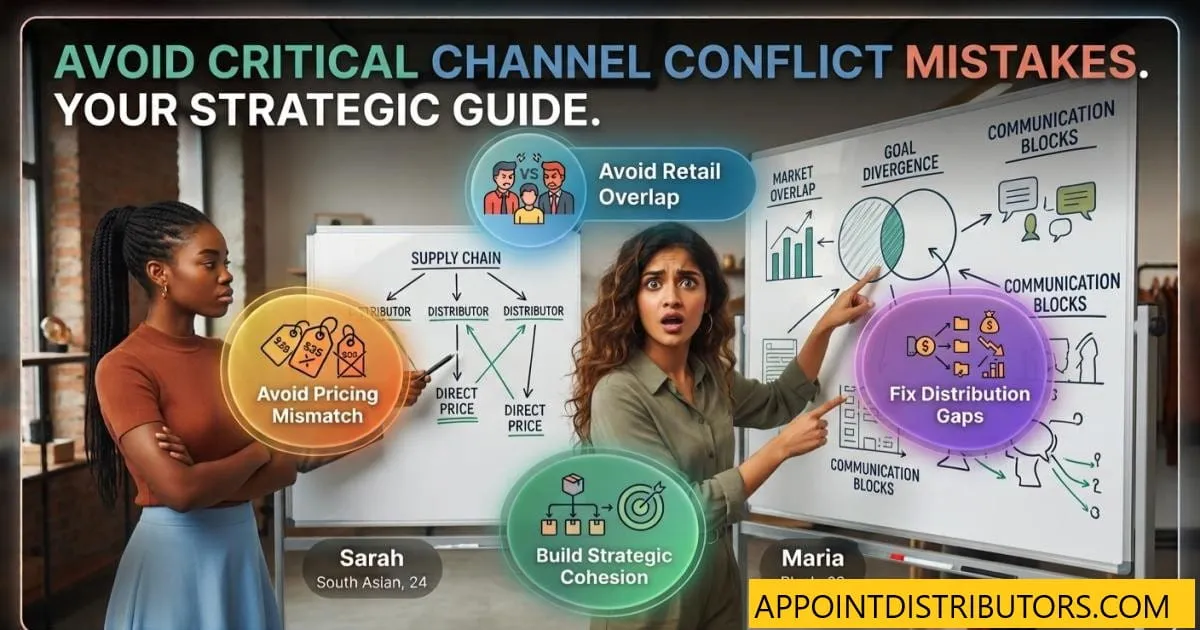
A distribution network can help a business reach more customers, enter new markets, and increase sales. But when a company sells through multiple channels, disagreements can sometimes arise between manufacturers, distributors, retailers, wholesalers, and online sellers.
This situation is known as channel conflict.
For example, a manufacturer may sell a product to its distributor at one price while offering the same product at a lower price through its own website. The distributor may then struggle to compete with the manufacturer. Similarly, two distributors may be given overlapping territories and end up targeting the same retailers.
These problems can damage relationships, reduce distributor confidence, and ultimately affect sales.
The good news is that most distribution conflicts can be prevented with clear pricing, territories, responsibilities, communication, and performance policies.
In this guide, we will explain what channel conflict is, why it happens, common examples, and practical ways manufacturers and distributors can avoid it.
Manufacturers looking to expand their market reach can connect with reliable FMCG distributors in India to grow their distribution network.
What Is Channel Conflict?
Understanding the right distribution channel is important when deciding how products should reach the target market.
Channel conflict occurs when two or more members of a distribution network have competing interests or disagree about how products should be sold, priced, marketed, or distributed.
A distribution channel may include:
Manufacturer → Distributor → Wholesaler → Retailer → Customer
A company may also sell through other channels such as:
-
Its own website
-
E-commerce marketplaces
-
Modern trade
-
Direct sales
-
Regional distributors
-
Super-stockists
-
Wholesalers
When these channels compete with one another instead of working together, channel conflict can occur.
Why Does Channel Conflict Happen?
There is rarely a single reason behind a distribution conflict. In most cases, it happens because different channel partners believe that another channel is affecting their sales, margins, customers, or territory.
Here are some of the most common causes.
1. Different Selling Prices
Price differences are one of the biggest causes of channel conflict.
Suppose a distributor purchases a product for ₹80 and sells it to retailers at ₹90.
Now imagine the manufacturer sells the same product directly online for ₹85.
The distributor may feel that the manufacturer is competing directly with the channel partner.
Before launching multiple sales channels, businesses should therefore establish a clear pricing structure.
2. Territory Overlap
Territory problems occur when two distributors are allowed to sell in the same area without clear rules.
For example, Distributor A may believe that a particular city belongs to them, while Distributor B starts approaching the same retailers.
This creates competition between distributors instead of healthy competition in the market.
A clear territory policy can prevent this problem.
3. Manufacturer Selling Directly to Distributor Customers
A distributor generally invests money and resources to develop a market.
Building a strong relationship between manufacturers and distributors is essential for maintaining a stable distribution network.
They may:
-
Visit retailers
-
Maintain stock
-
Build relationships
-
Provide local support
-
Manage deliveries
-
Generate orders
If the manufacturer later approaches those same customers directly without a clear policy, the distributor may feel that their investment is being undermined.
4. Online and Offline Competition
Many manufacturers now sell through both offline distributors and online channels.
This can create problems when the online price is significantly lower than the distributor's market price.
Customers may then move toward the online channel, while distributors find it difficult to maintain their margins.
The solution is not necessarily to avoid online sales. Instead, businesses need a clear omnichannel pricing and distribution strategy.
5. Unclear Margins and Incentives
Distributors need to understand how they will earn from the business.
If margins, discounts, incentives, schemes, or performance bonuses are unclear, disagreements can develop quickly.
A good distribution arrangement should clearly explain:
-
Distributor margin
-
Retailer margin
-
Trade discounts
-
Volume incentives
-
Promotional schemes
-
Performance-based benefits
6. Lack of Communication
Sometimes the actual problem is not pricing or territory.
It is simply poor communication.
A manufacturer may change a product price, launch a new scheme, appoint another distributor, or start selling online without properly informing existing partners.
Even a commercially reasonable decision can create conflict if channel partners learn about it unexpectedly.
Common Types of Channel Conflict
Channel conflict can occur at different levels of the distribution network.
Vertical Channel Conflict
This happens between different levels of the distribution chain.
For example:
Manufacturer ↔ Distributor
or
Distributor ↔ Retailer
A manufacturer and distributor disagreeing about pricing is an example of vertical channel conflict.
Horizontal Channel Conflict
This happens between businesses operating at the same level.
For example:
Distributor A ↔ Distributor B
Two distributors may compete for the same territory or customers.
Multichannel Conflict
This occurs when a company uses several sales channels that compete with one another.
For example:
Manufacturer → Distributor → Retailer
while simultaneously:
Manufacturer → Online Customer
If the manufacturer offers substantially different prices or benefits through these channels, conflict may arise.
Real-World Examples of Channel Conflict
Understanding examples makes the problem much easier to identify.
Example 1: Online Price Is Lower
A distributor buys a product for ₹100 and sells it through retailers.
The manufacturer's website sells the same product at ₹105 during a promotion, while the distributor's normal selling price is ₹120.
Retailers may start purchasing directly from the manufacturer's website.
The distributor may then reduce orders because the manufacturer's own pricing is affecting their business.
Example 2: Two Distributors in One Territory
A company appoints Distributor A for a city.
Later, it appoints Distributor B without clearly defining the territory.
Both distributors approach the same retailers.
Instead of expanding market coverage, the company has created internal competition.
Example 3: Distributor Builds a Market but Loses the Customer
A distributor spends months developing relationships with retailers.
Once the product becomes successful, the manufacturer starts supplying those retailers directly.
The distributor may feel that their investment in developing the market has been taken away.
Such situations can seriously damage long-term distributor relationships.
How Manufacturers Can Prevent Channel Conflict
Channel conflict is much easier to prevent than to repair.
1. Define Territories Clearly
Before appointing distributors, decide:
-
Which city or region they will serve
-
Which customer segments they can target
-
Whether online sales are included
-
Whether nearby territories are shared
-
What happens when a customer operates across multiple regions
Put important territory rules in writing.
2. Create a Consistent Pricing Structure
Manufacturers should carefully plan pricing across different channels.
The objective is not necessarily to make every channel's final price identical.
Instead, the company should make sure that channel partners can operate profitably without being unfairly undercut by another company-owned channel.
3. Define Distributor Rights and Responsibilities
A distributor should know exactly what is expected from them.
This can include:
-
Minimum order requirements
-
Sales targets
-
Stock requirements
-
Territory responsibilities
-
Payment terms
-
Marketing responsibilities
-
Customer service expectations
-
Reporting requirements
Clear expectations reduce misunderstandings.
4. Establish an Online Sales Policy
If a company plans to sell through its own website or marketplaces, it should decide how those sales will affect its offline distribution network.
For example, the company may establish different promotional rules, product bundles, territories, or channel-specific offers.
The important thing is to communicate the policy before conflicts arise.
5. Communicate Changes in Advance
If there is going to be a:
-
Price change
-
New distributor appointment
-
New online channel
-
New product launch
-
Promotional campaign
-
Territory change
existing channel partners should be informed appropriately.
Good communication can prevent many commercial disputes.
6. Monitor Distributor Performance
Manufacturers should not wait until a distributor complains.
Regularly review:
-
Sales growth
-
Order frequency
-
Market coverage
-
Active retailers
-
Stock movement
-
Territory performance
-
Customer feedback
This helps identify problems before they become serious.
Businesses looking for seasonal distribution opportunities can also explore these Diwali business opportunities to find product categories with potential during the festive season.
How Distributors Can Protect Their Business
Channel management is not only the manufacturer's responsibility. Distributors can also take practical steps.
Understand the Agreement
Before investing heavily, understand:
-
Territory
-
Margin
-
Payment terms
-
Credit period
-
Targets
-
Returns
-
Damaged goods
-
Expiry policy
-
Termination conditions
If something is unclear, discuss it before starting the business.
Build Strong Local Relationships
A distributor should not depend entirely on the manufacturer's brand reputation.
Strong relationships with retailers, wholesalers, and local customers can become an important competitive advantage.
Maintain Accurate Sales and Stock Data
Good data helps distributors understand what is happening in their territory.
Track:
-
Fast-moving products
-
Slow-moving products
-
Retailer orders
-
Repeat purchases
-
Outstanding payments
-
Territory-wise sales
This makes it easier to identify problems early.
Communicate Problems Quickly
If an online promotion is affecting retailer sales or another distributor is entering your territory, don't wait for the problem to become larger.
Raise the issue with the manufacturer and provide actual examples or sales data.
A Simple Channel Conflict Prevention Checklist
Before building a distribution network, manufacturers should answer these questions:
-
Is each distributor's territory clearly defined?
-
Are distributor margins clearly documented?
-
Are pricing policies consistent across channels?
-
Is there a policy for online sales?
-
Are sales targets realistic?
-
Are retailer and distributor responsibilities clear?
-
Is there a process for handling territory disputes?
-
Are promotional schemes communicated properly?
-
Is there a clear returns and damaged-goods policy?
-
Can distributors easily contact the company when problems arise?
If the answer to several of these questions is no, the distribution network may be vulnerable to channel conflict.
Channel Conflict vs Healthy Competition
Not every competition between channel partners is bad.
Healthy competition can encourage distributors and retailers to improve their sales performance.
The problem begins when competition becomes destructive.
For example, healthy competition could mean:
Two distributors work hard to increase sales in their clearly defined territories.
Destructive competition could mean:
Two distributors sell to the same retailers by repeatedly undercutting each other's prices.
The goal of channel management should therefore not be to eliminate competition completely. It should be to create clear rules so that competition does not damage the distribution network.
If you are in the personal care products business and looking for distributors for your products, you can explore these persoan care product distributors.
Frequently Asked Questions
What is channel conflict in distribution?
Channel conflict occurs when different members of a distribution network compete or disagree over issues such as pricing, territory, customers, margins, or sales channels.
What is an example of channel conflict?
A common example is when a manufacturer sells products online at a price significantly lower than the price at which its distributors can profitably sell the same products.
What causes distributor conflict?
Common causes include territory overlap, pricing differences, unclear margins, direct sales by manufacturers, online competition, unclear responsibilities, and poor communication.
How can manufacturers avoid channel conflict?
Manufacturers can reduce channel conflict by defining territories, establishing clear pricing and margin policies, communicating changes in advance, setting clear distributor responsibilities, and creating rules for online and offline sales.
Is channel conflict bad for a business?
Unmanaged channel conflict can damage distributor relationships, reduce sales motivation, create price competition, and weaken the distribution network. However, clearly managed competition between channels can be healthy for business growth.
For manufacturers planning to launch a new product during the festive season, having a clear distribution strategy for a new product can help them reach the right markets and customers more effectively.
Final Thoughts
A strong distribution network depends on more than simply appointing distributors.
Manufacturers need to build a system in which pricing, territories, margins, responsibilities, online sales, and communication are clearly managed.
For distributors, understanding the commercial terms and maintaining strong relationships with customers is equally important.
When both sides understand their responsibilities and work toward the same market objective, channel conflict becomes much easier to prevent.
A well-managed distribution channel does not simply move products from manufacturers to customers. It creates a sustainable business relationship where manufacturers grow their market, distributors earn profit, retailers receive reliable supply, and customers get consistent value.
What's Your Reaction?